Upper blepharoplasty
Corrects the excess skin and muscle of the upper lid. The incision sits in the natural crease, hidden when the eye is open. It can also restore peripheral vision when the skin acts like an awning.

Home · Facial surgery · Blepharoplasty
Blepharoplasty cases
Results, eye to eye. Eyelids operated on by Dr. César Padilla at Quirónsalud Málaga Hospital.
Tap any case to view it full size
Blepharoplasty
Why it happens
Eyelid skin is the thinnest in the body — barely half a millimetre — so it is the first to show the passage of time. With the years it loses elasticity, the orbicular muscle weakens and the tissue starts to fold over the lashes. At the same time, the membrane holding the fat that cushions the eye loosens, and that fat pushes forward: those are the bags.
It is not all about age: genetics rules. Some patients have lower-lid bags at 25; others keep firm upper lids at 50. Sun, tobacco, poor sleep and allergy-related eye rubbing accelerate the process but do not cause it.
Two different problems are often confused: drooping eyelids (excess skin and muscle above) and dark circles (a groove, pigmentation or a shadow cast by the bag itself). They look alike in photos and are treated differently — your consultation starts by telling them apart.
Techniques
Corrects the excess skin and muscle of the upper lid. The incision sits in the natural crease, hidden when the eye is open. It can also restore peripheral vision when the skin acts like an awning.
Removes or repositions the fat bags from inside the eyelid, with no skin incision. The safest route, minimising the risk of lid retraction.
When there is also significant excess skin, a fine incision just under the lashes allows it to be tightened. Usually combined with the transconjunctival approach.
All four eyelids in one procedure — the usual choice when periocular ageing is global, avoiding two trips to the operating room.
Before surgery
Your consultation starts with a thorough assessment of your anatomy and goals, followed by a photographic study used to plan the procedure and compare your results later on.
Practical points that apply to every surgery: arrive at a stable weight, have your medication reviewed (antiplatelets and anticoagulants are usually paused beforehand, always together with your doctor) and stop smoking well in advance — tobacco seriously compromises healing.
Three things worth mentioning at your first visit because they change the surgical plan: severe dry eye (practically the only ocular contraindication), blood-thinning medication, and recent fillers in the tear trough. Glaucoma, retinal conditions or previous cataract/LASIK surgery are not contraindications.
The pre-operative tests and the anaesthesia assessment are completed at Quirónsalud Málaga Hospital.
Recovery
Worth saying upfront: blepharoplasty is minimally invasive with a fast recovery, but it is not a minutes-long recovery. The first two weeks deserve care.
Tightness and heaviness rather than sharp pain, managed with standard painkillers and cold compresses. You can shower the next day and read from day one; temporary dry eye is treated with lubricating drops.
Swelling recedes, bruises change colour, stitches (if any) come out around one week. Most patients return to social and work life within 7–10 days. Contact-lens wearers: end of week one after upper surgery, week two after lower.
End of strict care: no heavy lifting or impact sport until two weeks have passed. Make-up near the scar waits 2–3 weeks when there is a skin incision (week one if transconjunctival).
Back to the sun with SPF — never while bruises remain: sun on a fresh bruise is the surest way to a lasting stain.
The scar matures and fades; the final result settles in.
Scars
In the upper blepharoplasty the incision hides in the natural crease: invisible with the eye open, a fine line when closed that fades over the first months. The transconjunctival route leaves no skin scar at all.
Reassuring fact: hypertrophic scarring on the eyelids is exceptionally rare, even in patients who scar poorly elsewhere.
Surgical honesty
Those are expression lines from the orbicular muscle; removing lid skin will not fix them. They have their own treatment.
With a deep tear trough plus bags, simply removing fat can hollow the lid and deepen the circle. The right technique is the opposite: repositioning your own fat to fill the groove.
It works on the lids, not inside the eye. What it can do is free up peripheral vision blocked by excess skin.
Whatever is marketed under that name is a different treatment. Nothing non-surgical removes excess skin.
Patient information
Every surgery carries risks and this one is no exception. You will go through them in detail during your consultation and in writing in the informed-consent form; this is the honest summary.
Expected — not a complication
Uncommon
When not to operate. Severe dry eye is practically the only ocular contraindication. Blood thinners need planning, and recent tear-trough fillers call for a few months’ wait.
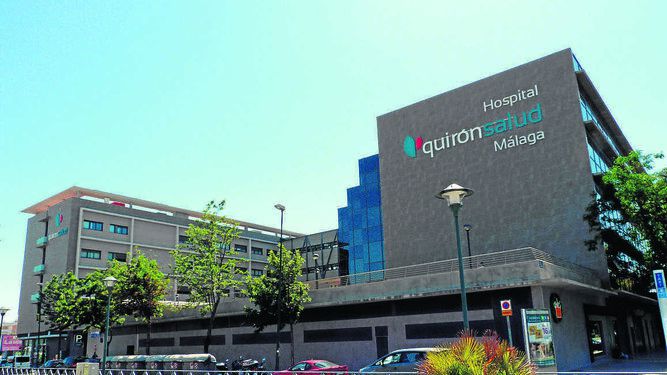
Hospital
Consultation, surgery and post-operative follow-up in a leading hospital: state-of-the-art operating rooms, ICU and private rooms.
12
Operating rooms
24 h
ER & ICU
100 %
Private rooms
Price
As a reference, an upper blepharoplasty starts around €1,300 and a complete four-lid procedure usually ranges €2,500–3,000. The final quote is personal, set after your clinical assessment, and includes surgeon’s fees, the facilities at Quirónsalud Málaga, sedation and all post-operative follow-up.
Insurance: cosmetic surgery is rarely covered, but when upper-lid skin genuinely blocks peripheral vision, health systems and insurers do recognise those cases. If your eyes feel heavy by the end of the day, raise it at your consultation.
About cheap offers. You will see plenty. Our honest advice: research and choose your surgeon first, and only then compare prices — never the other way round.
FAQS
There is no fixed age. Upper-lid excess usually shows from the forties, but hereditary bags can appear before 25. What matters is the clinical assessment, not the birthday.
Yes — an upper blepharoplasty can be performed under local anaesthesia alone, depending on the patient. Intravenous sedation keeps nervous patients perfectly comfortable without general anaesthesia.
Usually at the end of the first week after upper surgery, and around two weeks after lower surgery.
The anaesthetic protocol is decided at your consultation, with the assessment of the anaesthesia team at Quirónsalud Málaga Hospital as part of the pre-operative workup.
Content reviewed by
Dr. César Padilla
Specialist in Plastic, Aesthetic and Reconstructive Surgery
Member of the Spanish Society of Plastic, Reconstructive and Aesthetic Surgery (SECPRE)
15+ years of practice · Quirónsalud Málaga Hospital
Last content review: August 2026