Prominent ears
The most frequent indication: the cartilage is reshaped to create the missing fold and, if needed, reduce the conchal bowl, bringing the ear to a natural angle.
Home · Facial surgery · Otoplasty
Otoplasty cases
Ears operated on by Dr. César Padilla at Quirónsalud Málaga Hospital.
Tap any case to view it full size
Otoplasty
Why it happens
So-called prominent ears are a matter of cartilage: either the natural fold (the antihelix) never fully formed, or the conchal bowl is larger than usual and pushes the ear outwards — often both. It is present from childhood and strongly genetic.
It affects neither hearing nor health, but it does affect wellbeing: this is one of the most rewarding operations precisely because the complex usually dates back to the school playground. From age 6–7 the ears have completed most of their growth, so it can be corrected in children and adults alike — it is never too late.
Techniques
The most frequent indication: the cartilage is reshaped to create the missing fold and, if needed, reduce the conchal bowl, bringing the ear to a natural angle.
When one ear projects more than the other. The goal is not perfect symmetry — no face has it — but ears that no longer draw attention.
Otoplasty can also reduce oversized ears or reshape specific parts of the cartilage, such as the helix or the lobe.
From age 6–7, once cartilage growth is nearly complete. Operating in childhood spares years of playground teasing; operating as an adult ends them for good.
Before surgery
Your consultation starts with a thorough assessment of your anatomy and goals, followed by a photographic study used to plan the procedure and compare your results later on.
Practical points that apply to every surgery: arrive at a stable weight, have your medication reviewed (antiplatelets and anticoagulants are usually paused beforehand, always together with your doctor) and stop smoking well in advance — tobacco seriously compromises healing.
Specific to otoplasty: the procedure is ambulatory — no overnight stay — and in children it matters that the child understands and wants the operation: motivation is part of the indication, even at seven.
The pre-operative tests and the anaesthesia assessment are completed at Quirónsalud Málaga Hospital.
Recovery
One of the fastest recoveries in facial surgery. The realistic calendar:
You leave with a protective bandage. Discomfort is mild and controlled with standard painkillers; the hardest part is sleeping on your back.
The bandage comes off after a few days, replaced by a tennis-style elastic band for sleeping. Most adults return to work in 3–5 days.
Normal life with one rule: no contact sports for the first month. Children can return to school within days, avoiding rough play.
The cartilage is fixed in its new position. The result is permanent, for life.
Scars
The incision sits in the fold behind the ear, where it meets the head. Nothing is visible from the front — probably the most discreet scar in all facial surgery. It fades from pink to skin tone over the first months.
Surgical honesty
Surgery works on the outer ear only: ear canal, middle and inner ear are untouched. You will hear exactly the same.
A flat ear looks as odd as a prominent one. The target is a natural angle, decided by looking at the whole face.
Cartilage must complete its growth; operating earlier can compromise the result and the ear’s development.
Once reshaped and fixed, the result is permanent. No periodic touch-ups.
Patient information
Every surgery carries risks and this one is no exception. You will go through them in detail during your consultation and in writing in the informed-consent form; this is the honest summary.
Expected — not a complication
Uncommon
When not to operate. Active ear or skin infections must resolve first. In children, mature cartilage and the child’s own wish are both required.
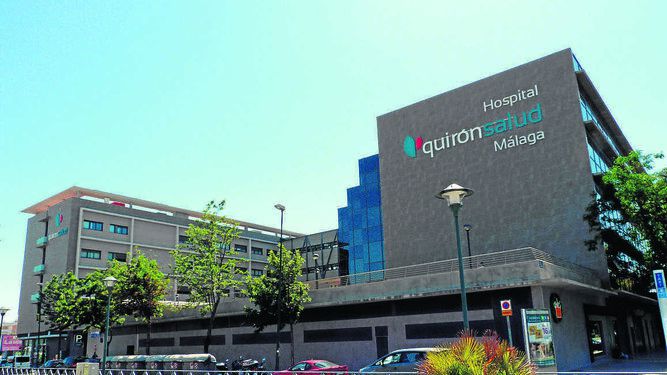
Hospital
Consultation, surgery and post-operative follow-up in a leading hospital: state-of-the-art operating rooms, ICU and private rooms.
12
Operating rooms
24 h
ER & ICU
100 %
Private rooms
Price
The quote is personal and depends on the complexity of the reshaping (one or both ears, fold and bowl or a single structure) and the anaesthesia appropriate to the patient’s age. It includes the operating room at Quirónsalud Málaga, follow-up visits and post-operative care.
About cheap offers. You will see plenty. Our honest advice: research and choose your surgeon first, and only then compare prices — never the other way round.
FAQS
No. The first days bring mild discomfort and swelling, well controlled with standard painkillers; the most annoying part is getting used to the protective band at night.
No. It reshapes the outer ear only — the ear canal and the middle and inner ear are untouched, so hearing stays exactly as it was.
From about 6–7 years, once the cartilage has completed most of its growth — and provided the child understands and wants the operation.
The anaesthetic protocol is decided at your consultation, with the assessment of the anaesthesia team at Quirónsalud Málaga Hospital as part of the pre-operative workup.
Content reviewed by
Dr. César Padilla
Specialist in Plastic, Aesthetic and Reconstructive Surgery
Member of the Spanish Society of Plastic, Reconstructive and Aesthetic Surgery (SECPRE)
15+ years of practice · Quirónsalud Málaga Hospital
Last content review: August 2026