Areolar (periareolar)
For mild ptosis: the scar hides around the areola and its diameter can be reduced at the same time. The minimal-trace technique.

Home · Breast surgery · Areolar mastopexy
Breast lift cases
Breast lift results by Dr. César Padilla at Quirónsalud Málaga Hospital.
Tap any case to view it full size
Areolar mastopexy
Why it happens
Breast droop — ptosis — is a natural process: pregnancies and breastfeeding, weight swings and the skin’s own elasticity make the gland descend and empty the upper pole. It is not about age: there is ptosis at 30 after two breastfeeds, and firm breasts at 50.
A simple reference tells the degree: the nipple’s position against the fold under the breast. Once it drops below, ptosis is established — and no cream or exercise reverses it, because the problem is the envelope, not the muscle. Mastopexy acts exactly there: lifting tissue, repositioning the areola and removing spare skin.
Techniques
For mild ptosis: the scar hides around the areola and its diameter can be reduced at the same time. The minimal-trace technique.
The most versatile: periareolar scar plus a fine vertical line. Lifts moderate droop, often avoiding the classic inverted T.
When droop comes with deflation — typical after breastfeeding — the lift combines with an implant or your own fat.
With enough gland, the breast can be lifted using solely your tissue: internal reshaping and areola repositioning, no prosthesis.
Before surgery
Your consultation starts with a thorough assessment of your anatomy and goals, followed by a photographic study used to plan the procedure and compare your results later on.
Practical points for every breast surgery: arrive at a stable weight, with breastfeeding finished months ago if applicable; have your medication reviewed (blood thinners are usually paused beforehand, with your doctor); and stop smoking. When age or history indicates it, a breast imaging study is completed first.
The pre-operative tests and the anaesthesia assessment are completed at Quirónsalud Málaga Hospital.
Recovery
Mastopexy recovers more comfortably than most people imagine: manageable discomfort and clear milestones.
Tightness rather than pain, controlled with prescribed analgesia. Sleep on your back with the post-op bra on — your companion for the coming weeks.
Progressive return to quiet daily life; check-ups monitor the scars as swelling recedes.
Light activity resumes, including gentle gym work without impact.
Green light for impact exercise with a proper sports bra.
The breast settles into its final position and scars fully mature: time to judge the result.
Scars
It depends on the degree of droop. Mild ptosis needs only the scar around the areola, where the change of colour and texture hides it naturally. Moderate degrees add a fine vertical line (the lollipop). Only the most severe cases require the horizontal fold incision.
Pink for the first months, they mature into fine lines with care and sun protection.
Surgical honesty
Lifting is not filling: an empty upper pole needs an implant or fat added. Your case decides one, the other or both.
You can be pregnant afterwards — but a later pregnancy may change the result. If it is in your near plans, waiting usually pays.
Mastopexy repositions; reduction removes tissue. If weight excess accompanies the droop, the right operation may be a reduction with a built-in lift.
The result is lasting, not eternal: stable weight and good bras are its best allies.
Patient information
Every surgery carries risks and this one is no exception. You will go through them in detail during your consultation and in writing in the informed-consent form; this is the honest summary.
Expected — not a complication
Uncommon
When to wait. Recent breastfeeding, near-term pregnancy plans or an unstable weight: mastopexy performs best on a stable body.
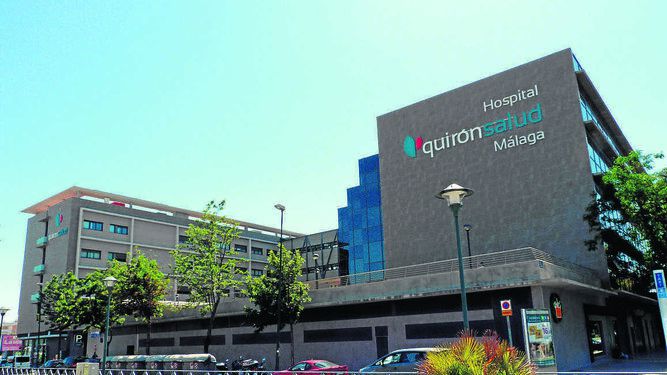
Hospital
Consultation, surgery and post-operative follow-up in a leading hospital: state-of-the-art operating rooms, ICU and private rooms.
12
Operating rooms
24 h
ER & ICU
100 %
Private rooms
Price
A closed, personal quote after assessment: an areolar lift is not priced like a lift with implants. Every quote includes operating room, anaesthesia, overnight stay at Quirónsalud Málaga, implants when used, aftercare and all first-year check-ups.
About cheap offers. You will see plenty. Our honest advice: research and choose your surgeon first, and only then compare prices — never the other way round.
FAQS
Check the nipple against the breast fold: below it means ptosis and the answer involves lifting; a well-positioned but deflated breast calls for augmentation. Both problems together — both solutions combined.
In most cases yes, as techniques preserve the ducts' connection. If future breastfeeding matters to you, say it at consultation — it conditions the technique.
Lasting, not eternal: the breast keeps living under gravity, weight and pregnancies. With a stable weight and good support you enjoy it for many years.
The anaesthetic protocol is decided at your consultation, with the assessment of the anaesthesia team at Quirónsalud Málaga Hospital as part of the pre-operative workup.
Content reviewed by
Dr. César Padilla
Specialist in Plastic, Aesthetic and Reconstructive Surgery
Member of the Spanish Society of Plastic, Reconstructive and Aesthetic Surgery (SECPRE)
15+ years of practice · Quirónsalud Málaga Hospital
Last content review: August 2026