Immediate or delayed
In the same act as the mastectomy or months/years later, depending on each clinical case and oncological treatment.

Home · Breast surgery · Breast reconstruction
Reconstruction cases
Reconstruction after breast cancer by Dr. César Padilla at Quirónsalud Málaga Hospital. Cases.
Tap any case to view it full size
Breast reconstruction after cancer
Why it matters
After a mastectomy for breast cancer — or facing a severe malformation — reconstruction is not an aesthetic whim: it is part of the patient’s full recovery. Rebuilding the breast helps close the process, make peace with the mirror and return to life without a permanent reminder of the disease.
Two things are worth knowing from the start. First: there is no rush — reconstruction can be immediate (same operation as the mastectomy) or delayed months, even years; it is never too late to consider it. Second: planning goes hand in hand with your oncologist, so surgery accompanies treatment, never the other way round.
Techniques
In the same act as the mastectomy or months/years later, depending on each clinical case and oncological treatment.
The classic route: an expander creates the space, then a definitive high-cohesive gel prosthesis restores the volume.
Water-assisted (WAL) harvesting brings thickness and naturalness to reconstructed tissue, alone or alongside an implant.
The final step: microsurgery or micropigmentation completes the breast’s appearance.
Before surgery
Your consultation starts with a thorough assessment of your anatomy and goals, followed by a photographic study used to plan the procedure and compare your results later on.
Practical points for every breast surgery: arrive at a stable weight, with breastfeeding finished months ago if applicable; have your medication reviewed (blood thinners are usually paused beforehand, with your doctor); and stop smoking. When age or history indicates it, a breast imaging study is completed first.
Specific here: the plan is coordinated with oncology — reconstruction adapts to treatment. Radiotherapy-treated skin is assessed with special care, and the healthy breast’s symmetrisation is part of the same planning.
The pre-operative tests and the anaesthesia assessment are completed at Quirónsalud Málaga Hospital.
Recovery
More than a single post-op, reconstruction is a path with two or three stations. Knowing it upfront prevents frustration.
The main surgery: expander or implant, flap or fat. General anaesthesia with advanced pain-control protocols; discomfort manageable with medication.
Months later, if needed, the healthy breast is adjusted (lift or reduction) and the reconstructed one refined, often with fat transfer.
The closing step: minor surgery, enormous effect on the result.
Normal life: each stage has its own short recovery and check-ups. The calendar adapts to you and your treatment — not the other way round.
Scars
Whenever possible, existing mastectomy scars are reused, avoiding new routes. Additional incisions — symmetrisation or fat-donor areas — are planned in discreet zones. Radiated skin heals differently and is treated with special care — one reason own-fat techniques, which improve tissue quality, play such a role in modern reconstruction.
Surgical honesty
Planning is coordinated with oncology and follow-up tests continue normally. Reconstruction adapts to treatment, never compromises it.
The honest goal is symmetry: dressed and in a bikini, nobody should tell the difference. That is why the healthy side is usually refined too.
With tissue and fat available, reconstruction can rely on your own body. The technique is chosen for your case, not from a catalogue.
Mastectomised years ago and nobody offered reconstruction? It is still possible. Delayed reconstruction has no deadline.
Patient information
Every surgery carries risks and this one is no exception. You will go through them in detail during your consultation and in writing in the informed-consent form; this is the honest summary.
Expected — not a complication
Uncommon
The radiotherapy factor conditions the type and timing of reconstruction: sometimes delaying, or relying more on your own tissue, is the wise route. A technical decision taken with you and your oncologist.
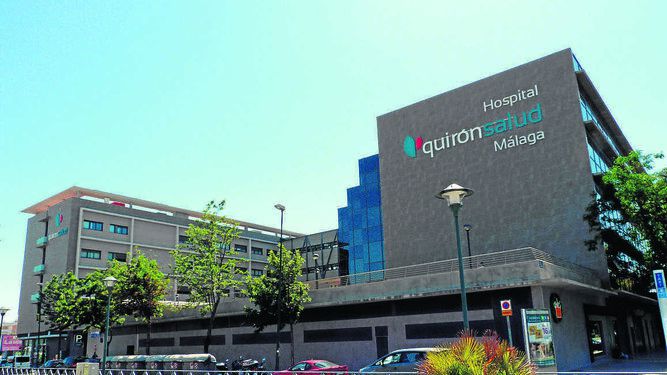
Hospital
Consultation, surgery and post-operative follow-up in a leading hospital: state-of-the-art operating rooms, ICU and private rooms.
12
Operating rooms
24 h
ER & ICU
100 %
Private rooms
Price
Reconstruction after breast cancer is reparative surgery, not cosmetic: public health systems contemplate it and many private policies cover it fully or partially, including symmetrisation of the healthy breast. Each case is reviewed individually at consultation — including what your insurance covers. No small print.
About cheap offers. You will see plenty. Our honest advice: research and choose your surgeon first, and only then compare prices — never the other way round.
FAQS
It does not prevent it, but it shapes it: radiated skin heals differently, and sometimes delaying reconstruction or relying more on your own tissue is wiser. The decision is taken with your oncologist.
As reparative surgery after cancer, public health covers it and many private policies do too — including the healthy breast's symmetrisation. It is reviewed case by case at consultation.
Usually two or three stages: volume reconstruction, symmetrisation of the other breast, and finally areola and nipple. Each has a short recovery, and the calendar adapts to you.
The anaesthetic protocol is decided at your consultation, with the assessment of the anaesthesia team at Quirónsalud Málaga Hospital as part of the pre-operative workup.
Content reviewed by
Dr. César Padilla
Specialist in Plastic, Aesthetic and Reconstructive Surgery
Member of the Spanish Society of Plastic, Reconstructive and Aesthetic Surgery (SECPRE)
15+ years of practice · Quirónsalud Málaga Hospital
Last content review: August 2026