After pregnancy
The most common case: separation plus stretched skin. Muscle repair combined with a tummy tuck, with the scar below the bikini line.
Home · Body surgery · Diastasis recti
Body surgery
Repair of rectus diastasis by Dr. César Padilla at Quirónsalud Málaga Hospital.
Before & after
Diastasis recti cases are shown in consultation, where Dr. Padilla can show you results of patients in a situation similar to yours. Meanwhile, you can browse the before & after of every other procedure or request your consultation.
What it is
Diastasis recti is the separation of the rectus abdominis muscles: the connective tissue joining them down the midline (the linea alba) stretches and weakens, leaving a “gap” between the two. The classic sign is a domed abdomen, or a central bulge that appears as you sit up, even if you are a healthy weight and exercise regularly.
It is far more common after pregnancy — the expanding uterus pushes the muscles apart — but it also affects men, athletes and patients whose weight has fluctuated. And it is not only cosmetic: losing your core translates into lower back pain, poor posture and functional weakness.
This practice has made diastasis one of its hallmarks: it is one of the things patients ask about most, and Dr. Padilla’s blog has a whole guide to it (in Spanish): what it is and how it is treated, how to tell whether you have it o how dangerous it is.
The surgery
Diastasis surgery means bringing the rectus muscles back together and reinforcing them through a plication of the midline: an anatomical repair, layer by layer, restoring the abdominal wall’s original tension. Dr. Padilla’s approach favours repair with your own tissue, without mesh, wherever the case allows: rebuilding your anatomy rather than patching it.
Where there is also excess skin — the typical picture after pregnancy — the repair is combined with a tummy tuck. And in slim patients with barely any surplus skin, the approach is adapted to leave the smallest possible trace: diastasis is not only a post-partum “apron” problem.
Scenarios
The most common case: separation plus stretched skin. Muscle repair combined with a tummy tuck, with the scar below the bikini line.
Genuine diastasis with no excess skin: the approach is adapted to repair the muscle with the smallest possible scar.
Diastasis does not discriminate by sex: repeated strain, genetics and weight separate male rectus muscles too.
Where the breasts also need attention, the repair is folded into the combined plan with a single recovery.
Before surgery
First, measure: the examination locates the separation and how far it extends, and where necessary this is confirmed with imaging. We also check for an associated hernia (umbilical, epigastric), a frequent travelling companion: if there is one, it is repaired in the same operation.
If the degree is mild, the honest thing is to say so: specialist physiotherapy (hypopressive exercises, deep core work) can improve minor cases, and this practice recommends it before surgery whenever that makes sense. Once the separation is established, no exercise closes it — and some make it worse: what not to do if you have diastasis.
Conditions: a stable weight, your family complete if possible (a later pregnancy can undo the repair), no smoking, and a pre-operative workup at Quirónsalud Málaga Hospital.
Aftercare
Rebuilding your core is a methodical process: the repair needs protecting in the first weeks and progressive training afterwards.
Abdominal tightness and a slightly stooped posture — normal and temporary. Compression garment from the outset and prescribed pain relief.
Quiet life at home, short walks and no lifting. The compression garment protects the repair while it heals.
Back to non-physical work and an unstrenuous routine. Posture is completely normal by now.
Progressive, prescribed exercise; the core is retrained in a guided way and classic sit-ups are the last to return, under supervision.
The result is consolidated: a firm abdominal wall, a flat stomach and — what patients are most grateful for — a back that has stopped complaining.
Scars
With an associated tummy tuck, the scar is that of the tummy tuck: hip to hip, hidden below the bikini line. In slim patients with no excess skin, the mark is kept as small as the repair allows. The full healing course is described in the post on the scar after diastasis surgery.
Surgical honesty
Once the separation is established, classic crunches will not bring it together — and can worsen it by raising abdominal pressure. It was never a lack of effort: it was the wrong exercise.
It relieves and supports, but it does not rejoin separated muscles. Useful as a support; misleading as a treatment on its own.
…although they look alike and sometimes coexist. Diastasis is muscle separation with no hernia defect; if there is a true associated hernia, it is repaired in the same operation.
Men and athletes get it too — and seek advice less often simply because they do not know about it. The diagnosis is identical.
Patient information
Every operation carries risks and this one is no exception. You will go through them in detail at your consultation and in writing in the informed consent form; this is the honest summary.
Expected, not a complication
Uncommon
Timing matters: operating once your family is complete and your weight is stable is the best guarantee that the repair will last.
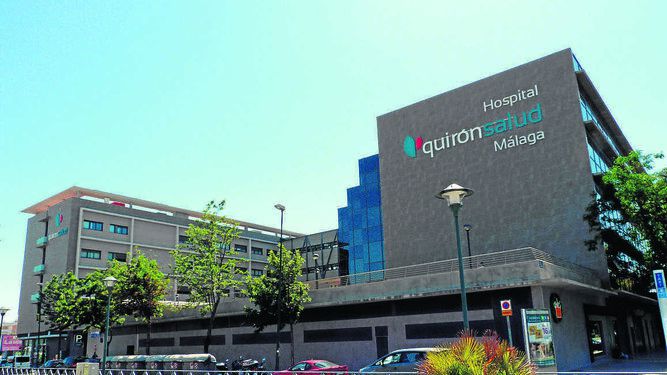
Hospital
Consultation, surgery and post-operative follow-up in a leading centre: state-of-the-art operating theatres, intensive care and a private room.
12
Operating theatres
24 h
A&E and intensive care
100 %
Private room
Price
The quote is fixed and tailored to you: it depends on the degree of separation, on whether a tummy tuck is combined with it and on whether there is a hernia to repair. It includes the operating theatre and your stay at Quirónsalud Málaga, anaesthesia, the compression garment, dressings and review appointments.
About special offers. You will see plenty of them, and it is worth saying plainly: first inform yourself and choose your surgeon, then ask about prices. Not the other way round.
FAQS
The classic test: lie on your back, bend your knees and lift your head slightly; if you feel a groove or see a bulge rising along the midline of your abdomen, it is worth having it looked at. The diagnosis is confirmed by examination and, if needed, by imaging.
Mild cases can improve with specialist physiotherapy (hypopressive exercises, deep core work). Once established, no exercise rejoins the separated muscles — and classic sit-ups can make it worse. Where that line falls is determined at your consultation, honestly.
It is not an emergency, but nor is it a cosmetic whim: it weakens the core, encourages lower back pain and worsens over time. And it is worth ruling out an associated hernia, which is a medical condition in its own right.
This practice favours anatomical repair with your own tissue, without mesh, wherever the case allows. Where diastasis comes with an associated hernia or a very weakened wall, the technique is adapted to whatever safety demands.
Your GP or physiotherapist can make the diagnosis, but surgical repair belongs to the plastic surgeon — when it is combined with a tummy tuck — or to the general surgeon. What matters is specific experience with the abdominal wall.
You can — but a new pregnancy can separate the repair again. That is why we recommend operating once your family is complete. If a pregnancy does happen it is not dangerous: you may simply lose the result.
The protocol is decided at your consultation, with an assessment by the anaesthetics department at Quirónsalud Málaga Hospital as part of the pre-operative workup.
Content reviewed by
Dr. César Padilla
Specialist in Plastic, Aesthetic and Reconstructive Surgery
Member of the Spanish Society of Plastic, Reconstructive and Aesthetic Surgery (SECPRE)
15+ years of practice · Quirónsalud Málaga Hospital
Last content review: August 2026
Other treatments by Dr. César Padilla in Málaga